AI enhanced - Civil Services Mentoring Platform
Real Governance Insights
for UPSC Aspirants
Learn from 33+ years of policing and administrative experience. Ethics, strategy, integrity — all in one platform.
Meet Your Mentor
G. H. P. Raju
"Public service is not merely a career. It is a responsibility to uphold justice, integrity and compassion."
A retired Indian Police Service officer with over 33 years of distinguished service in policing and governance, GHP Raju now dedicates his experience to guiding UPSC aspirants — especially in Ethics & Integrity (GS Paper IV).
Read Full BiographyCareer Highlights
Our Mission
Five Pillars of this Platform
Accessible Knowledge
Quality guidance available to all aspirants, regardless of background.
Administrative Realism
Insights drawn from real governance experience, not just theory.
Ethical Leadership
Preparing honest and effective civil servants for modern India.
Structured Preparation
Curriculum fully aligned with the UPSC syllabus and exam patterns.
Community Learning
Discussions, Q&A, and mentorship at the heart of the platform.
New Feature
The Daily Bridge
Every day, our AI pipeline scans top Indian newspapers, maps each story to the UPSC GS syllabus, and links it to relevant Previous Year Questions — so you never miss a current affairs angle.
India tightens semiconductor policy under new domestic manufacturing push
Everything You Need
Explore the Platform
Six purpose-built tools to supercharge your UPSC preparation — from AI-powered practice to curated ethics content.
Mock Quiz
Timed UPSC-style MCQs with instant explanations and performance analytics.
- GS Paper I–IV coverage
- Configurable timer & difficulty
- Detailed answer rationale
Syllabus Tracker
Visually map and track your progress across every UPSC topic in real time.
- Topic-wise progress bars
- GS I–IV + CSAT coverage
- Persistent session data
Interview Mock
Simulate a real UPSC personality test with AI-driven questions and voice feedback.
- AI-generated board questions
- Text-to-speech responses
- Instant AI evaluation
AI Assistant
Chat with an AI tutor trained on UPSC syllabus, ethics, and governance topics.
- GS & Ethics guidance
- Answer structuring tips
- Available 24 / 7
Ethics Module
Deep-dive into GS Paper IV — integrity, case studies and thinker philosophies.
- Foundational concepts & values
- Case study walkthroughs
- Thinker frameworks
Q & A
Browse curated UPSC questions and model answers for Mains answer writing practice.
- Model answers by GHP Raju
- Topic-tagged repository
- Download-ready formats
Research Report: Prelims
Advanced GS Paper I syllabus analysis (2014–2026) with a 100-question model examination.
- Trend analysis & macroeconomic data
- 100-question model paper 2026
- Full explanations & answer review
Video Learning
Featured Lessons
 9 min
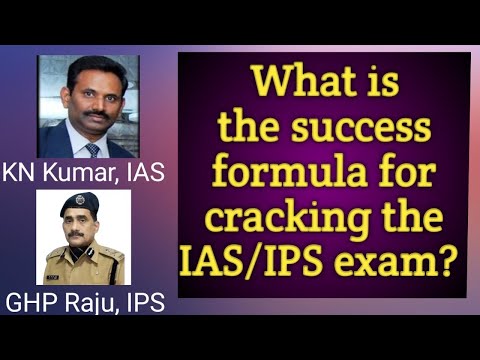
9 minR.A.P.I.D Formula for Success in the Civil Services Examination
GHP Raju IPS breaks down his proven R.A.P.I.D framework — a structured approach to cracking the IPS/IAS selection examination.
Watch Now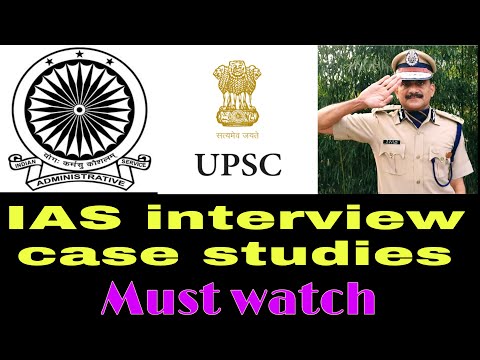 27 min
IAS Interview — Case Studies: Must Watch
In-depth walkthrough of real IAS interview case studies with Sir's analysis of what the board is looking for in a future administrator.
Watch Now 6 min
6 minSelf Discipline & Fitness: A Way of Life for Civil Servants
Sir explains why physical discipline is inseparable from mental discipline — a message for every serious UPSC aspirant.
Watch NowPlan Your Preparation
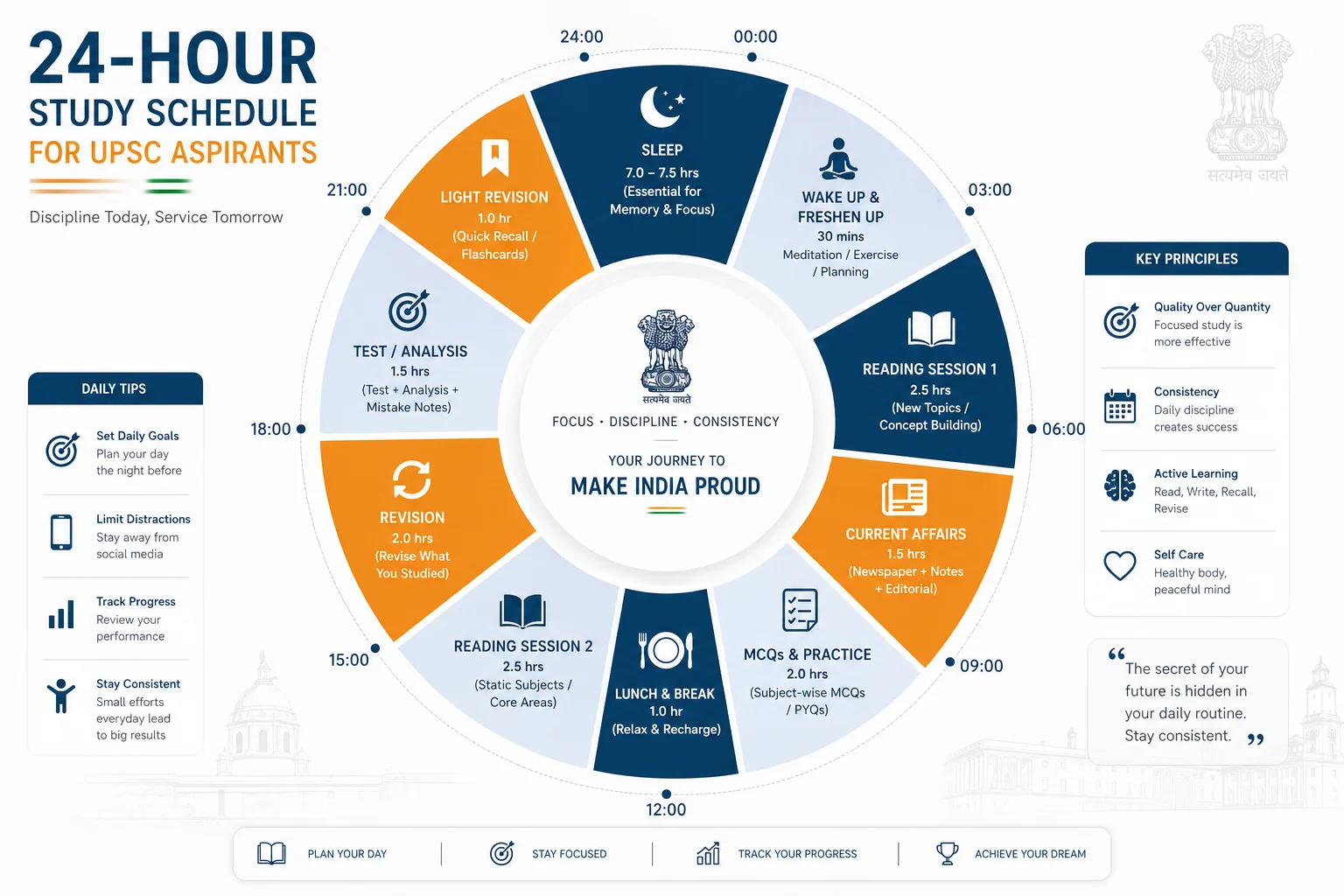
Roadmap & Schedule
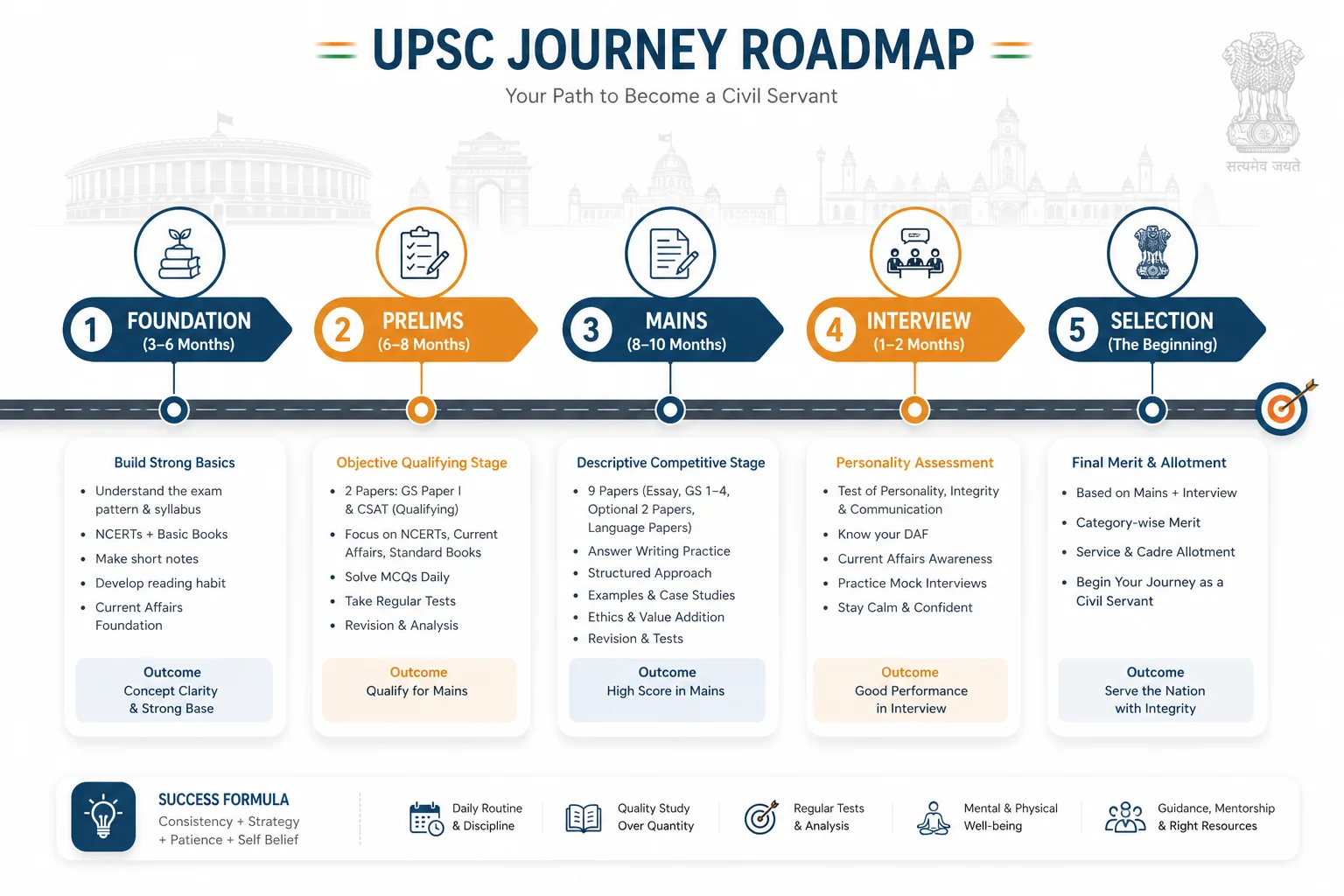
Use these curated guides to structure your UPSC journey — from day one to the final interview.
UPSC Preparation Roadmap
Study Schedule
Data-Backed Strategy · CSE 2026
Cracking the Code: How Top 100 Rankers Actually Win UPSC Mains
Every year, lakhs of aspirants sit the UPSC Civil Services examination. Fewer than 12,500 make the Mains list. And every year, the top 100 rankers — the ones who walk away with the IAS, IFS, and premier IPS services — do something the rest do not: they allocate their time, energy, and attention where the marks actually are, not where convention says they should be.
The Examination: What the Numbers Actually Say
The UPSC Civil Services Mains carries 2,025 marks in total: 1,750 in the Mains written examination across seven papers of 250 marks each (Essay, GS-1, GS-2, GS-3, GS-4, and two Optional papers), and 275 marks in the Personality Test. On paper, every subject appears equal. In reality, they are not.
An analysis of AIR 1 to 100 marksheets compiled over the last decade — drawn from topper-shared data, reputed coaching institute analyses, and UPSC's own aggregate publications — reveals a consistent and striking pattern:
Average scores of AIR 1–100 rankers, 2013–2024
| Paper | Max Marks | Avg % (Top 100) | Focus Index |
|---|---|---|---|
| Essay | 250 | 54–56% | |
| GS-1 (History, Geography, Society) | 250 | 44–46% | |
| GS-2 (Polity, Governance, IR) | 250 | 44–46% | |
| GS-3 (Economy, S&T, Environment) | 250 | 41–43% | |
| GS-4 (Ethics, Integrity) | 250 | 47–50% | |
| Optional Paper 1 | 250 | 61–64% | |
| Optional Paper 2 | 250 | 63–65% | |
| Personality Test | 275 | 66–68% |
Source: Compiled from AIR 1–100 marksheets, 2013–2024.
The Focus Index: A Smarter Way to Allocate Time
The Focus Index is not a marking scheme. It is a strategic signal. It answers a precise question: given how much this paper actually contributes to a top-100 finish, and given how reliably top rankers score well here, how much preparation priority does it deserve?
The index is calculated by combining two factors — the average percentage that top rankers actually score (which reveals the paper's scoring ceiling for well-prepared candidates) and the effective contribution of that paper to the final total compared to its nominal weight. A high index means the paper is both scoreable and impactful. A low index means it is either hard to score well in, or relatively lower in its actual rank impact — or both.
The results are revealing. Optional Papers and the Personality Test are not just nominally important — they are where the top 100 ranks are genuinely won. The four GS papers, on the other hand, function more as a qualifying floor. You must not fall below a threshold in GS, but you are unlikely to vault into the top 100 because of GS alone.
The Three Strategic Truths Behind the Data
Optional Is Where the Race Is Run
Top 100 rankers average 61–65% in their Optional papers — a full 15 to 20 percentage points higher than in most GS papers. Combined, the two Optional papers deliver roughly 310–330 marks for top performers, against a GS paper average of around 110–120 marks. Candidates who reach the top 100 almost universally do so on the strength of a well-chosen, deeply prepared Optional subject. If your Optional is weak, nothing else compensates.
GS-3 Is the Systematic Risk
GS-3 — covering economy, agriculture, science and technology, environment, and internal security — is the consistently lowest-scoring paper even among top 100 rankers. In multiple recent years, AIR-1 holders scored below 100 out of 250. For aspirants targeting the top 100, GS-3 is not where you win marks; it is where you must stop losing them. Risk control, not brilliance, is the right frame for this paper.
The Personality Test Delivers Disproportionate Returns
At 275 marks with an average scoring of 66–68% among top rankers, the Personality Test is the single highest-index component in the entire examination. Top 100 candidates routinely score 185–205 marks here. Yet most aspirants treat PT as an afterthought, spending three weeks on it after nine months on Mains. The PT is teachable, it rewards preparation, and a ten-mark swing here — entirely achievable through structured mock boards — can move you fifteen to twenty ranks.
The Recommended Time Allocation
Translating the Focus Index into a practical preparation schedule, the recommended weekly time allocation for a candidate targeting the top 100 in CSE 2026 is:
The Four Markers That Separate Top 100 from Top 500
- Answer writing discipline. Top rankers write more answers under timed conditions than any other category of candidates. Two peer-reviewed answers per day, across rotating papers, is a minimum — not a target.
- Optional mastery over breadth. Rather than covering every GS topic superficially, top rankers go deep in Optional. Scoring 320–340 in two Optional papers is worth more to your rank than gaining 30 marks across four GS papers.
- A living data bank for GS-3. Economy, agriculture, and S&T answers live or die on specific facts and figures. Top rankers maintain a rolling bank of 20–25 key statistics, updated weekly from the Economic Survey, Budget, and ministry reports. This alone is worth 10–15 marks in GS-3.
- Personality Test as a structured paper. Every noun in your DAF is a potential question. Top rankers prepare structured responses — not memorised scripts, but thought-through positions — on every significant entry in their biography. Five diverse mock boards with honest feedback is the minimum before the actual interview.
The Bottom Line
The UPSC examination does not reward those who work the most. It rewards those who allocate their work most intelligently. The data from a decade of top-100 marksheets is unambiguous: Optional Papers and the Personality Test are the decisive levers. The GS papers are the qualifying floor. GS-3 is the silent threat.
If you are preparing for CSE 2026 with serious rank ambitions, the first question to answer is not 'How many hours am I putting in?' It is: 'What proportion of those hours are going where the marks actually are?'
Answer that question correctly, and your strategy will already be better than most.
— Written from three decades of observing what discipline, strategy, and honest self-assessment look like in high-stakes selection.
GS Paper IV
Civil Services Ethics Framework
The five pillars that underpin ethical conduct in public administration — as taught by GHP Raju through 33 years of lived experience.
Integrity
Accountability
Objectivity
Governance
Empathy
Ethics Core
UPSC · GS Paper IV
Begin Your Civil Services Journey Today
Join hundreds of aspirants who have transformed their UPSC preparation with guidance from 33 years of real governance experience.